The M&L technology approach
Smart Agriculture & Greenhouse Automation
Automatically control irrigation, ventilation and greenhouse equipment based on soil moisture, temperature, humidity, wind and environmental conditions.

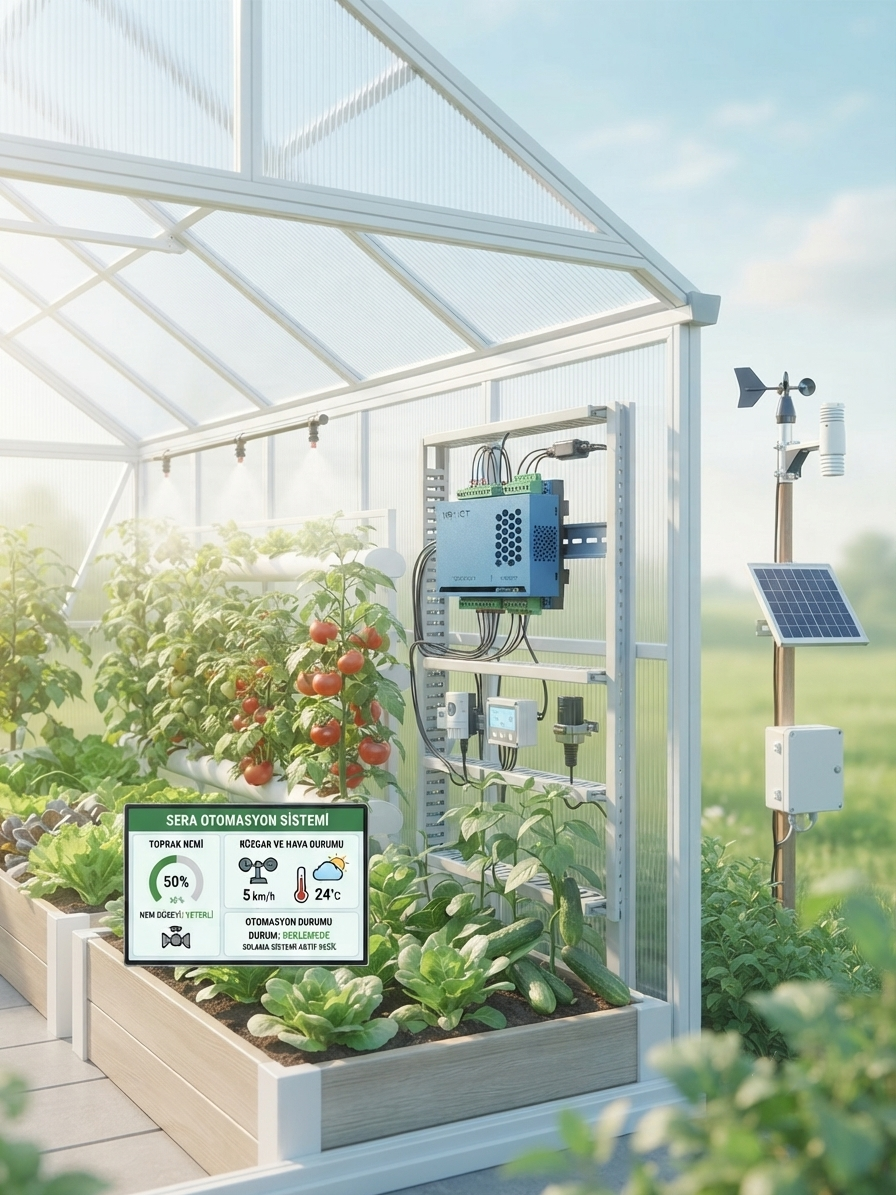
Build Automation That Responds to What Your Crops Actually Need
NetRelay allows agricultural and greenhouse systems to move beyond traditional timer-based irrigation. Soil moisture, ambient temperature, humidity, light, rainfall, wind and other environmental data can be used to create automation workflows based on actual field conditions.
Sensor information can be evaluated by the system to automatically control pumps, solenoid valves, ventilation fans, heaters and other field equipment through relay outputs.
Automatic Irrigation Based on Soil Moisture
When soil moisture falls below a configured threshold, irrigation can start automatically. Once the target moisture level is reached, pumps or valves can be stopped to prevent unnecessary water consumption.
Irrigate Based on Actual Need, Not Just Time
Traditional irrigation systems usually operate according to fixed schedules. NetRelay allows time conditions to be combined with live sensor data, so irrigation can run only when both timing and soil conditions are appropriate.
Stop Irrigation When It Rains
Rain sensors or external weather information can be included in automation rules. Active irrigation can be stopped or scheduled irrigation can be postponed when rainfall is detected.
Wind-Based Irrigation Control
Strong wind can significantly reduce the efficiency of sprinkler systems. Wind sensor data can be used to automatically suspend irrigation when wind speed exceeds a configured limit.
Greenhouse Temperature Control
When greenhouse temperature exceeds a predefined limit, NetRelay can activate ventilation fans, exhaust systems or motorized ventilation equipment. Systems can automatically stop once temperature returns to the desired range.
Humidity Management
High relative humidity can increase the risk of certain plant diseases. Humidity measurements can be used to control ventilation and other environmental equipment automatically.
Automatic Frost Protection
When ambient temperature approaches critical frost levels, heating equipment or circulation fans can be activated automatically. Critical temperature events can also generate notifications in the central monitoring system.
Manage Multiple Irrigation Zones
Different crops and soil types can be divided into separate irrigation zones. Each zone can have its own moisture thresholds, irrigation durations and scheduling rules.
Pump and Valve Control
NetRelay relay outputs can be used with appropriate contactors or control equipment to manage irrigation pumps, solenoid valves and auxiliary systems. Irrigation zones can also be operated sequentially to avoid exceeding pump capacity.
Water Tank Level Monitoring
Level sensors and float switches can be connected to digital inputs to monitor irrigation water availability. Low water levels can prevent dry pump operation and generate automatic alarms.
Pump Fault and Dry-Run Monitoring
Pump status contacts, thermal alarms or suitable current sensors can help verify whether the pump is operating correctly. A fault condition can automatically stop irrigation and generate a central alert.
Sunrise and Sunset Automation
Irrigation and greenhouse workflows can also use sunrise and sunset triggers. Irrigation can start before sunrise or greenhouse lighting can activate automatically after sunset.
A Real Smart Irrigation Scenario
Consider an agricultural field equipped with soil moisture, rain, wind and water tank level sensors connected to the automation system.
At the scheduled irrigation window, the system first checks soil moisture. If the soil is dry, it checks rainfall, wind speed and water availability. When all conditions are suitable, the correct irrigation valve opens and the pump starts.
Irrigation automatically stops when the desired soil moisture level is reached. If wind becomes excessive or the water level becomes critical, the process is safely suspended and the event is reported.
A Real Greenhouse Scenario
Temperature, humidity and soil moisture can be monitored continuously. Ventilation can start when temperature becomes too high, additional ventilation can activate when humidity exceeds limits and irrigation can begin when soil moisture falls below its target.
During cold nights, heating equipment can automatically activate when frost-risk temperatures are detected.
Central Monitoring and Remote Management
NetRelay devices deployed across multiple greenhouses or agricultural zones can communicate through Ethernet, Wi-Fi or MQTT with a central application. Temperature, humidity, soil moisture, pump, valve and alarm status can be monitored from one interface.
Agriculture and Greenhouse Reports
- Soil moisture history
- Daily and monthly irrigation duration
- Irrigation reports by zone
- Pump runtime reports
- Valve operation history
- Temperature and humidity trends
- Frost-risk and critical temperature events
- Irrigation cancelled because of high wind
- Irrigation postponed because of rainfall
- Water tank level history
- Pump fault records
- Alarm and critical event history
Measure Water Consumption
With suitable flow meters or pulse-output water meters, actual water consumption can also be collected. This allows water use to be analyzed by irrigation zone, crop or field instead of relying only on irrigation duration.
Local Automation Without Internet Dependency
Internet connectivity in agricultural areas may not always be reliable. NetRelay can support local automation architectures that allow essential irrigation and environmental control workflows to continue without continuous cloud connectivity.
Go Beyond Monitoring
Smart agriculture is more than displaying sensor values on a dashboard. The real value comes from turning environmental data into automatic physical actions.
Irrigate when the soil is dry, stop when wind becomes excessive, ventilate when temperatures rise and automatically record critical events. Turn your agricultural operation into a measurable and programmable system with NetRelay.