The M&L technology approach
Camera-Based Production Counting
Analyze camera streams with artificial intelligence and computer vision to make production counts real-time, verifiable and reportable.
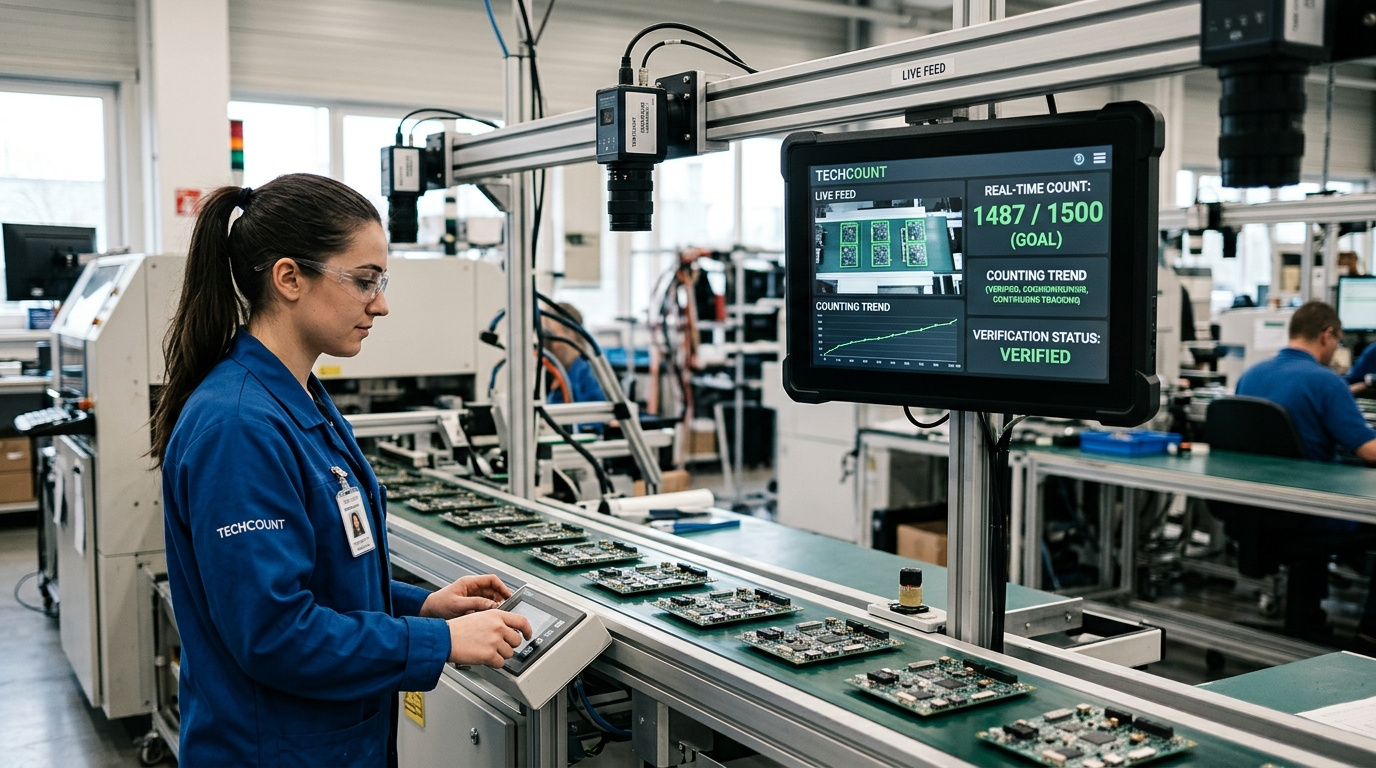
Real-Time and Verifiable Production Counting from Camera Feeds
M&L Technology uses Artificial Intelligence and Computer Vision to detect, track and count products directly from production-line camera streams in real time.
Cameras positioned at conveyors, packaging lines, production exits or other process points can automatically generate production quantities without relying exclusively on manual operator input.
Make Existing Cameras Intelligent
Where image quality and project conditions are suitable, existing IP camera infrastructure can be integrated into an AI-powered production counting system, transforming video streams into measurable production data.
Detect Products with Artificial Intelligence
Computer Vision algorithms identify products within the image and monitor movement through virtual counting zones or lines. Object tracking can be used to evaluate actual movement rather than repeatedly counting the same object across consecutive video frames.
Real-Time Production Quantities
Production counts can be transferred to central software while camera images are being analyzed. Operators and managers can monitor current production totals through web or desktop dashboards.
Verify Counts with Visual Evidence
Traditional counters may provide a number without making it easy to determine how that number was produced. Camera-based systems can associate production events with relevant images or video timestamps, creating a foundation for visual verification.
Generate Evidence Alongside Production Data
If the system reports 1,248 units produced between 14:00 and 15:00, the result can be associated with the corresponding production line, camera and time interval. Production data can therefore be compared with visual records when verification is required.
Count Products on Conveyors
Boxes, packages, parts and other products moving across conveyor systems can be counted automatically as they cross a virtual counting line.
Product speed, spacing, camera position, lighting conditions and product geometry are considered when designing the project-specific Computer Vision model.
Count Different Product Types Separately
When required, AI models can classify multiple product types within the same camera view and maintain separate counters for each product class.
Track Direction of Movement
Production lines with forward and reverse movements can produce incorrect counts when simple line-crossing logic is used. Object tracking can identify movement direction so only products travelling in the defined production direction are counted.
Avoid Duplicate Counting
A physical product may appear in hundreds of video frames but should still be counted only once. Tracking algorithms follow each object across frames and use its movement history to generate the production event.
Production Counts by Line and Camera
Multiple cameras can be deployed across different production lines, with each camera representing a separate production point. Counts can then be combined in a central platform.
- Production by Line 1
- Production by Line 2
- Production by Line 3
- Total factory output
- Shift-based production
- Hourly production rate
Shift-Based Production Reports
Camera-generated production events can be associated with shift schedules to calculate output automatically for each shift.
Compare Target vs. Actual Production
Work-order targets from ERP or production systems can be compared with actual quantities measured by the camera system, allowing live monitoring of remaining quantities and target achievement percentages.
Measure Production Speed
In addition to total output, the system can calculate how many units are produced during specific intervals. Drops in hourly or minute-by-minute production rates can help reveal emerging performance issues.
Make Micro-Stoppages Visible
Periods with no product movement can be identified as interruptions in production flow. When combined with machine signals, this information can support downtime and performance analysis.
Compare with PLC or Machine Counters
Camera-generated quantities can be compared with PLC counters or other automation data sources. Differences between independent measurements can help identify sensor, counter or process issues.
Physical Automation with NetRelay
Decisions generated by the Computer Vision system can be converted into physical actions through NetRelay IoT.
For example, a warning light can activate when a target quantity is reached, a relay can trigger at the completion of a batch or an alarm can notify operators when unexpected production conditions are detected.
Combine Counting with Quality Inspection
Where suitable, the same vision architecture can perform both counting and visual quality checks. Missing components, incorrect positioning, visual defects or product-class differences can be evaluated while each item is counted.
Count Good and Defective Products Separately
Quality models can maintain separate counters for total, accepted and defective products, allowing production quality rates to be monitored while production is still running.
ERP and MES Integration
Camera-based production results can be transferred to ERP, MES and production tracking applications through APIs or project-specific integration services.
Real-Time Dashboards
- Current production quantity
- Hourly output
- Shift totals
- Daily production
- Target versus actual performance
- Production rate by line
- Good and defective product counts
- Active production or stoppage status
Analyze Historical Production
Production records can be queried by date, shift, product, camera or production line to identify high-performing periods, low-performing shifts and longer-term output trends.
Improve Production Data Reliability
Manual reporting can introduce incorrect values, missed entries and end-of-shift batch updates. Camera-based counting converts physical product movement into digital production records at the moment it occurs.
Turn Production Counting into Operational Data
Counting an item with a camera is only the beginning. When the count is associated with time, shift, product, work order, line and quality information, it becomes powerful operational data for manufacturing decisions.
With M&L Technology, transform cameras from passive recording devices into intelligent production sensors that measure output in real time and generate verifiable production data.
Community
Comments and questions
Nothing has been published yet.